Six-piece box
The maker's own price. Airport and hotel shops mark it up.

A powder salt made from water drawn out from under an island 300 km away, and sold, as it happens, on the main shopping street in Naha until ten at night.
Almost every guide files yukishio under "Miyako Island souvenir", which is true and unhelpful.
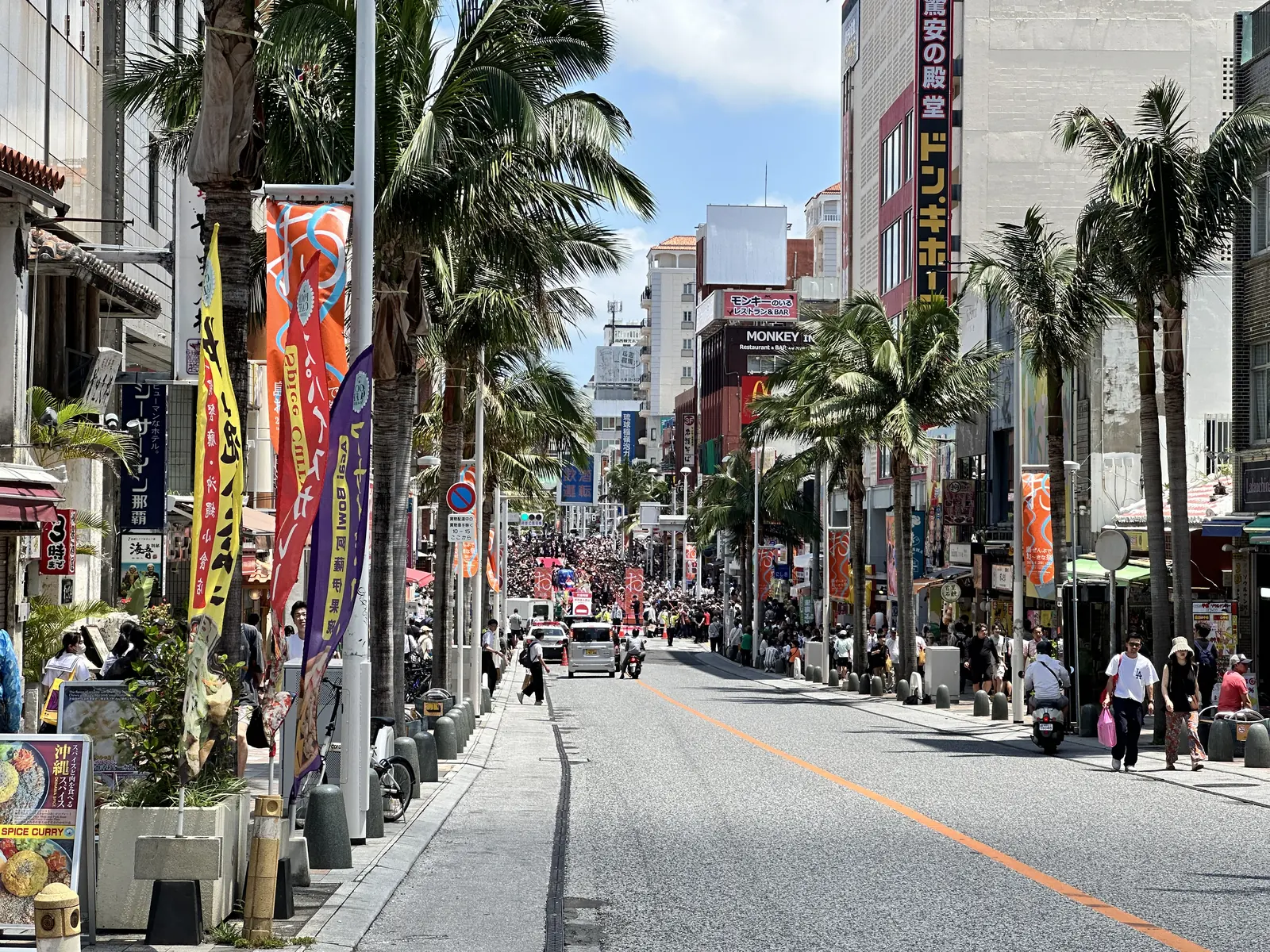
Most people visiting Okinawa never go to Miyako. It is a separate island, a separate flight, and usually a separate holiday. So the useful fact is not where the salt is made. It is that the company's flagship shop sits on Kokusai-dori in Naha and stays open until 22:00, seven days a week.
The second useful fact is that this is a salt you can actually taste the point of. It is not a crystal; it is a powder that dissolves the moment it lands, which is why it goes on tempura and rice balls rather than into a grinder.
Miyako has no rivers. Rain sinks straight through the Ryukyu limestone that makes up the island and collects underground, and where that fresh water meets the sea it produces a body of seawater that has spent a long time in contact with the rock.
Yukishio is made from that groundwater seawater, not from the surface of the sea. The maker's description is specific: the water is filtered slowly through the limestone, and a patented process evaporates it in an instant so that the nigari, the bitter magnesium-rich fraction that ordinary table salt production strips out, stays in the finished product.
That is why it comes out as powder rather than crystals, and why it tastes rounder and less sharp than a sea salt flake.
You will see a mineral-count claim everywhere: a Guinness recognition from 2000 for the number of minerals present. It is repeated by JETRO, the Japanese government's own trade organisation, in its case study of the company. We could not find it on the manufacturer's current product pages, so treat it as widely cited rather than freshly confirmed.
Miyako is a low, flat, riverless island of Ryukyu limestone. Water goes down rather than across.
The seawater drawn up for yukishio has passed through that rock, carrying its minerals with it.
A patented process removes the water almost instantly instead of by slow drying, so the minerals do not separate out.
The bitter fraction usually discarded is kept, which is what makes the texture powdery and the taste soft.
These are the figures published by the company itself. Third-party shops, airport concessions and online resellers charge what they like. We have seen the sweets quoted anywhere from ¥900 to ¥2,160, so this table is the benchmark to judge them against.
| The salt itself | Size | Price |
|---|---|---|
| Yukishio, powder | 60 g | ¥486 |
| Yukishio, powder | 120 g | ¥864 |
| Cooking bottle | 50 g | ¥540 |
| Yukishio Kotsubu, jar | 55 g | ¥864 |
| Yukishio Kotsubu | 110 g | ¥972 |
| Flavoured salts | Price | |
|---|---|---|
| Plum salt · sesame salt | ¥650 | |
| Yukishio pepper | ¥700 | |
| Chilli salt | ¥750 |
| Everything else | Price | |
|---|---|---|
| Yukishio soap | 80 g | ¥1,650 |
| Yukishio soap | 20 g | ¥660 |
| Yukishio toothpaste | 100 g | ¥1,320 |
| Mozuku soup | ¥700 | |
| Yukishio parin | ¥1,400~ | |
| Miyakojima cider | ¥200~ | |
| Yukui gift set | ¥2,700 | |
| Aparagi gift set | ¥3,700 | |
| Pukarasu gift set | ¥5,900 |
The shop also sells a larger twelve-piece box of the sando alongside the six-piece one. We could not confirm its price on the company's own store, so we have left it out rather than guess.
Yukishio sando is a biscuit sandwich around an aerated chocolate filling made with the salt. It is the company's signature sweet and the thing the brand is known for outside Okinawa.
What makes it a good souvenir is not the flavour, which you can judge for yourself, but the logistics: 240 days from manufacture, individually wrapped, stable at room temperature, and a solid rather than a liquid. It survives being forgotten in a suitcase for a week and it does not count against your cabin liquid allowance.
The maker's own price. Airport and hotel shops mark it up.
From manufacture, not from purchase. Check the date on the box.
Wheat, egg, dairy, almond and soy. Not a safe default gift for everyone: what to hand out →
The Naha shop is the one that matters for most visitors: it is in the middle of the Kokusai-dori shopping mile, it has no closing days, and 22:00 means you can go after dinner rather than building it into the day.
Note that it has no car park. On Kokusai-dori that is normal and not a problem. The street is on the monorail line and closed to private cars on Sunday afternoons anyway. Getting around Naha →
Beyond the company's own shops, the salt and the sweets turn up in supermarkets, convenience stores and airport concessions across the prefecture, usually at a higher price than the table above. Which supermarket chain to use →
One more thing worth knowing before you spend: from 1 November 2026, tax-free shopping in Japan switches to a refund-after-departure model. The sealed bag on food goes with it, though anything opened and eaten in Japan stops qualifying for the refund. What changes →
No. The flagship shop is at 3-1-1 Kumoji on Kokusai-dori in Naha, open 10:00 to 22:00 every day of the year. Miyako is a separate flight and a separate holiday for most visitors.
Two things. It is made from seawater drawn from beneath the island, which has filtered through Ryukyu limestone, and it is flash-evaporated so the nigari, the bitter fraction normally removed, stays in. That is why it is a powder rather than crystals, and why it tastes softer.
¥486 for 60g and ¥864 for 120g of the powder, and ¥1,200 for the six-piece sando box, at the maker's own prices. We have seen the sweets sold elsewhere between ¥900 and ¥2,160, so it pays to know the benchmark.
Yes. It is a solid, so the liquid rules do not apply. That is the main practical advantage it has over awamori as a gift to carry.
240 days from manufacture. Check the printed date rather than counting from the day you bought them.
Yes. Flavoured salts with plum, sesame, pepper and chilli from ¥650, a mozuku seaweed soup at ¥700, and a skincare line including a ¥1,650 soap and a ¥1,320 toothpaste. The soap travels better than most cosmetics because it is solid.